
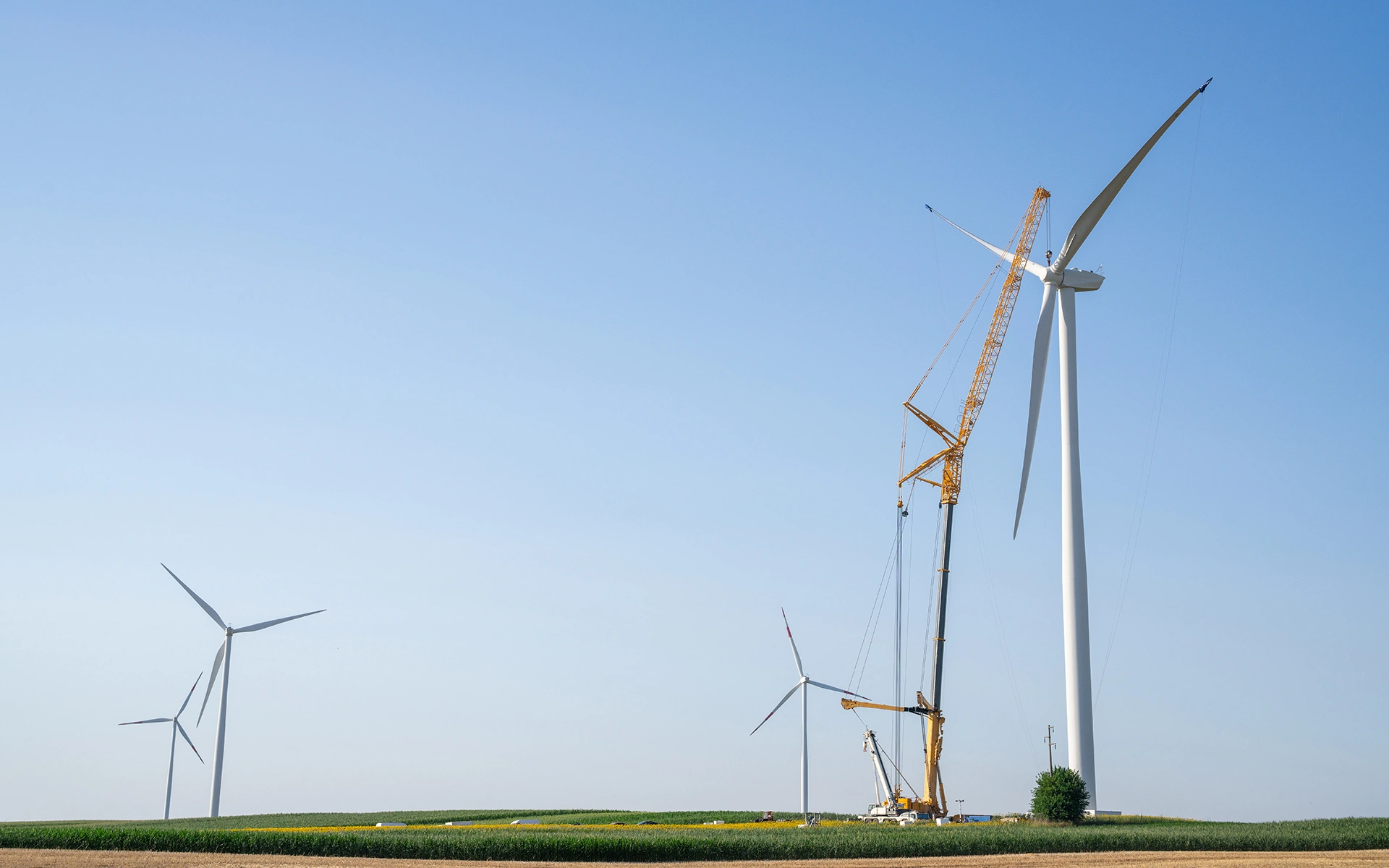
As renewable assets age, the need to modernise them becomes universal. However, the way this transformation unfolds can vary dramatically from one country to another. Although revamping and repowering share a common technical foundation, the regulatory, environmental and administrative realities surrounding them are deeply shaped by local context. One example of these differences can be seen in the varying situations in Spain, Italy and Japan. These are all mature renewable markets, each with its own rules, constraints and opportunities, and each with a different approach to upgrading wind and solar PV plants.
It is essential for owners and investors to understand these differences when navigating the next phase of asset evolution. The same intervention, a module replacement, a turbine upgrade or a BESS integration, can follow three very different paths, depending on the location of the plant. It is precisely this diversity that creates complexity and opportunity.
Spain: flexibility with fragmented rules
Spain is a country where renewable development has grown rapidly, but where revamping and repowering still operate within a regulatory landscape that is evolving. The absence of a unified national framework means that many decisions depend on regional interpretation, especially when environmental procedures come into play. The RDL 20/2022 introduced a pathway to avoid full Environmental Impact Assessments under certain conditions, but developers must still navigate a mosaic of criteria that vary from one region to another.
For revamping, Spain tends to be relatively permissive. When no major design changes are introduced, projects can often proceed with a simple modification or notification to the administration. Repowering, however, becomes more complex. Replacing inverters, structures or transformers may trigger environmental reassessment, and any increase in installed capacity must remain within strict limits. Galicia stands out as a unique case: here, repowering is not only regulated, it is compulsory for older wind farms, with specific requirements on turbine reduction and land restoration.
Grid connection adds another layer of specificity. Any modification that alters installed capacity requires updating access and connection permits, and hybridisation with BESS must follow the full administrative pathway. Spain offers flexibility, but it demands careful navigation.
Italy: a structured and highly codified framework
Italy presents almost the opposite scenario: a market where revamping and repowering are governed by a clear, centralised regulatory structure. The Consolidated Law on Renewable Energy (Legislative Decree 190/2024) introduced a streamlined system with three distinct regimes, Free Activity, PAS (Procedura Abilitativa Semplificata, simplified authorisation procedure) and AU (Autorizzazione Unica, single authorisation procedure), each aligned with the complexity of the intervention. For many revamping and repowering projects, the PAS procedure offers a defined, predictable path, provided that the plant does not expand its footprint or trigger significant environmental impacts.
The Italian incentive system adds another layer of specificity. Plants benefiting from GSE (Gestore dei Servizi Energetici, the Italian Energy Services Operator) schemes must comply with strict rules when replacing modules or inverters, including limits on allowable power variation and mandatory notifications for significant interventions. This ensures transparency but requires meticulous planning.
Grid connection procedures are equally structured. Any increase in injection power triggers the TICA (Testo Integrato delle Connessioni Attive, integrated regulation for active grid connections) process, often requiring Model 1B submissions, impact studies and potential network reinforcements. Technical requirements are rigorous: updated inverters, compliant PPC systems, SCADA upgrades and full adherence to Terna’s grid code, including LVRT/HVRT capabilities and reactive power control. For BESS, Italy has some of the most detailed fire safety and operational guidelines in Europe, shaped by national VVF (Vigili del Fuoco, Italian fire authority) regulations.
Italy’s framework is demanding, but it offers clarity, something invaluable for long‑term planning.
Japan: precision, compliance and controlled evolution
Japan approaches revamping and repowering with the same precision that characterises its broader energy sector. The Electric Business Act defines the administrative backbone for any modification to generation facilities, and Ministry of Economy, Trade and Industry (METI) plays a central role in certifying changes, especially when output or operational characteristics are affected.
Environmental requirements depend heavily on local ordinances, and land‑use restrictions can be decisive, particularly in agricultural zones or areas governed by the City Planning Act. The transition from FIT (Feed-in Tariff) to FIP (Feed-in Premium) has introduced new layers of complexity: projects must now comply with stricter operational, reporting and market participation rules, making revamping and repowering not only technical decisions but also strategic ones.
BESS integration is subject to detailed certification, safety and reporting requirements. Although projects involving only batteries may avoid national Environmental Impact Assessment (EIA) procedures, local authorities often impose their own assessments. Japan’s approach is methodical, cautious and deeply rooted in compliance, ensuring that any upgrade aligns with national safety and grid stability priorities.
| Country | Regulatory approach | Revamping | Repowering |
| Spain | Fragmented, region-dependent | Generally flexible, minor administrative procedures | More restrictive, may trigger environmental, reassessment and permit updates |
| Italy | Centralised and highly structured | Clear pathways (e.g. PAS) predictable procedures | Well-defined but strict, especially under incentive schemes |
| Japan | Strict, compliance-driven | Allowed under controlled administrative processes | Highly regulated, linked to certification and market scheme (FIT/FIP) |
Conclusion
The different situations in Spain, Italy and Japan demonstrate that revamping and repowering are not universal processes, but rather country-specific journeys shaped by regulation, environmental criteria, grid requirements and administrative culture. Spain offers flexibility but demands careful regional navigation. Italy provides structure and predictability, supported by detailed national rules. Japan prioritises precision, safety and compliance, ensuring that every upgrade aligns with strict operational standards.
It is essential for owners and investors to understand these differences. The success of any revamping or repowering project hinges not only on technology, but also on the ability to interpret and adapt to the unique regulatory landscape of each market. In a sector where assets are ageing and expectations are rising, this knowledge is a strategic advantage and a necessary foundation for shaping the next generation of renewable infrastructure.