
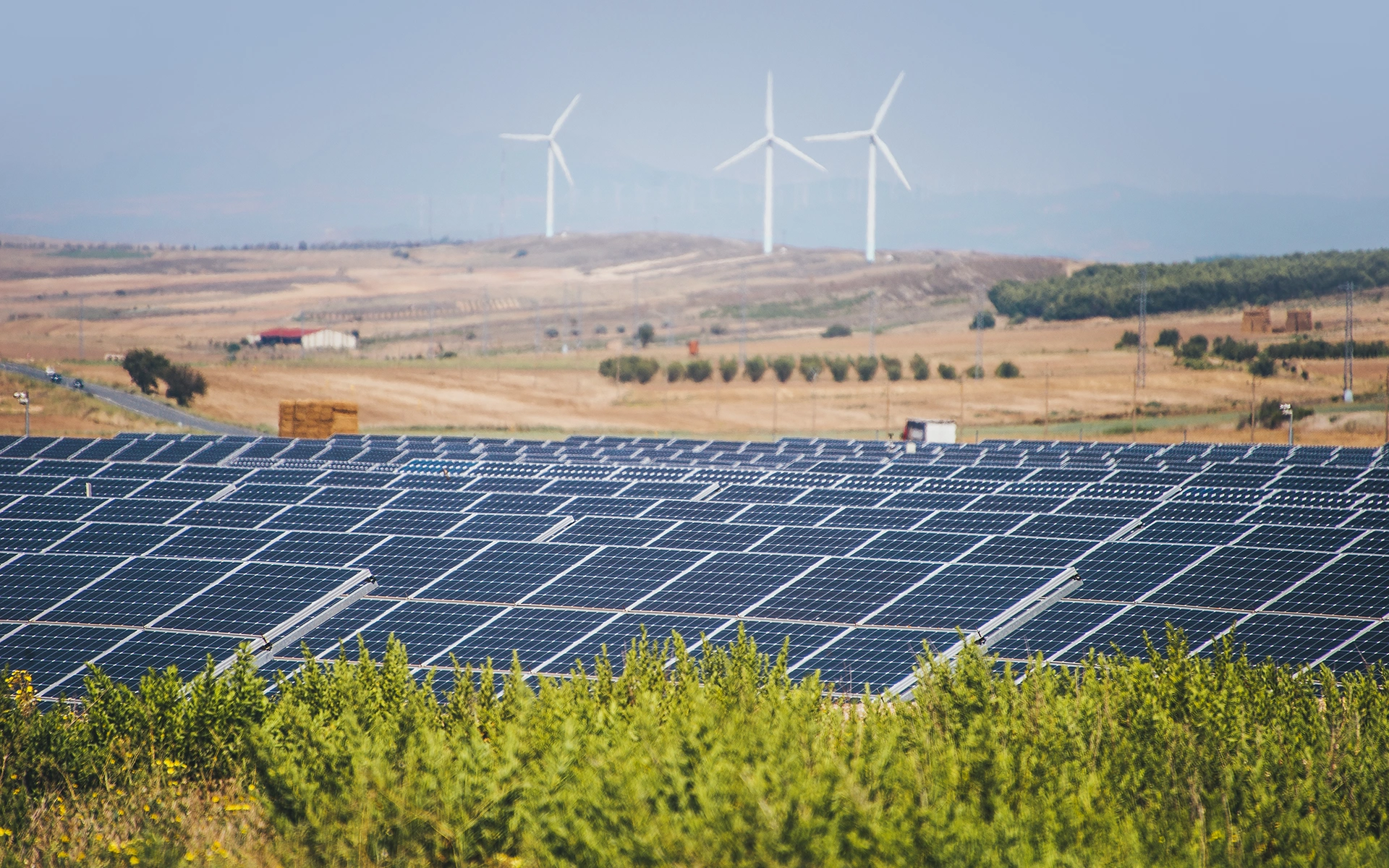
In the current Spanish energy market, a proliferation of photovoltaic (PV) projects at an advanced stage of development, ready for construction (Ready to Build), or with a few months of operation under their belts has been identified. Although these projects have a defined base case for the corresponding business model, the crucial question remains: is it possible to improve the results by optimising costs, increasing production, and/or ensuring a more stable energy supply to the grid?
Spain, as a pioneer in renewable energy solutions, has increasingly embraced hybridisation as a strategy to optimise renewable energy projects. Different solutions can be implemented, including solar-thermal, solar-wind and wind-hydraulic configurations, as well as the hybridisation of these technologies with energy storage systems. This analysis focuses on the hybridisation of photovoltaic projects in an advanced stage of development or already in operation with wind projects under development, a technical combination with the potential to enhance both efficiency and sustainability.
The most representative technical aspects of this type of hybridisation are:
- Complementarity of solar and wind resources: integrating both technologies optimises energy production by combining a solar profile (very stable and with very little variation throughout the year) with a variable wind profile, highly defined by the conditions of its location. This hybridization is particularly advantageous when wind generation profiles are mainly nocturnal, perfectly complementing a PV generation profile, thereby minimising energy losses at the connection point due to curtailment.
- Wind potential study: to obtain reliable results and minimise uncertainty, it is crucial to conduct an accurate study of the wind potential in areas near the photovoltaic plant. Key aspects include the spatial resolution of the data, the appropriate methodology, and consideration of any existing elements in the surroundings that may alter the final resource.
- Strategic location selection: in the development of new wind projects for hybridization, the proper selection of the location is fundamental. Factors such as the feasibility of the land from a construction point of view (topography and access) and administrative-environmental (protected or limited areas) must be considered.
- Optimization of existing infrastructure: this involves designing the turbine locations and integrating them strategically to maximize installed capacity and minimise additional costs. Furthermore, it is essential to place the wind farm in areas close to the step-up substation of the existing PV plant to capitalise on the interconnection infrastructure of the PV plant and reduce electrical losses.
- Feasibility of hybridization: to ensure that both technologies operate simultaneously throughout their useful life, the feasibility of hybridisation in existing PV plants, including those with more than 10 years of operation, must be studied.
- Selection of main equipment: the efficient design of the wind turbines, considering the optimal turbine model, is essential for the good performance of the project.
As project develops, the application of algorithms for intelligent energy management becomes essential. These algorithms can anticipate weather conditions and optimise the operation of both solar modules and wind turbines, maximizing the performance of the hybridised project.
Although the initial investment in hybridisation may be significant, it is a viableoption for investors seeking to improve the long-term profitability of the project and maximise the utilization of the capacity granted at the grid connection point. This solution would be a sustainable investment, generating clean energy and reducing the carbon footprint.
With the aim of maximizing equivalent hours and achieving an optimal Levelized Cost of Energy (LCOE) for our clients, Vector Renewables team supports investment funds, independent power producers, developers, and financial entities in decision-making processes.